
When we talk about creativity in evaluation, we don’t just mean being arty (although you can be arty with it if you like!), we mean thinking creatively about how you can find out what difference your work has made.
Creative thinking can be used in every stage of the evaluation process, but it is especially useful when considering methods.

This blog relates to the ‘collecting evidence‘ section of the evaluation pathway.
The evaluation process can seem daunting… but you’re probably already doing part of your evaluation without even realising!
You are already doing elements of evaluation if you are:
- Making observations—noticing the differences and changes in people
- Asking people what they think and noting both positive and negative responses
- Writing up case notes and keeping records of feedback
- Discussing and planning activities, then debriefing afterwards
- Looking to improve things based on what you’ve learned
- Adjusting activities based on feedback
We often visit organisations who say they haven’t gathered any information… only for us to find a treasure trove of information that has just not been tapped into yet.
For example, we may find quote trees, artistic representations of how people are feeling, photos of people participating in sports… all of which can be used as evidence towards measuring your impact!
So, how can you capture this evidence and use it for evaluation? …This is where creative thinking comes in!
There is no one-size-fits-all method, it really depends on what you’re trying to find out!
The people you work with are more likely to share useful information and feedback with you if the method is engaging and interesting.
Look at what you already do and see if you can capture that information.
If the way you gather evidence is embedded into your service delivery, it will save you time and make collecting information more seamless.
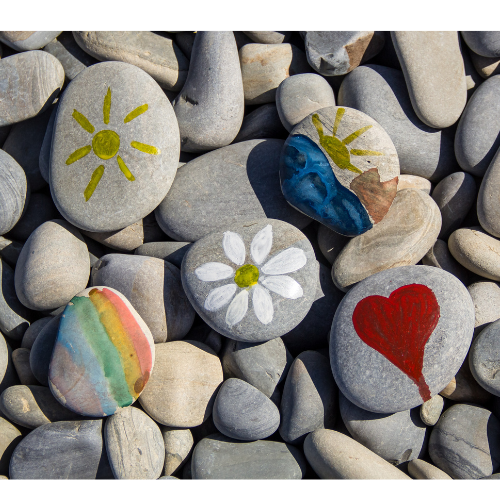
For example, if you are doing an activity which involves painting pebbles, you can use the activity to ask somebody to write a word on the pebble in response to a question. You could then repeat the activity after a few sessions and see if there is a difference in the word they choose.
Similarly, instead of asking somebody to fill out a form while they’re standing outside during a sports activity, you might ask them to kick a football into a particular net to answer a question.
Try and make the process easy on yourself. The easier you make it, the more likely it is that it’ll happen!
Questionnaires are not the be-all and end-all of evaluation methods!

If using a questionnaire would be helpful, and is something you think the people you work with would do, then it has its place among your methods.
But, if you’re struggling to engage your participants and get responses, it is likely that your questionnaire poses a barrier.
We have often seen practitioners desperately trying to find ways of encouraging people to fill in a questionnaire, when it would be better to use that energy to focus on a different method – one that people will want to do.
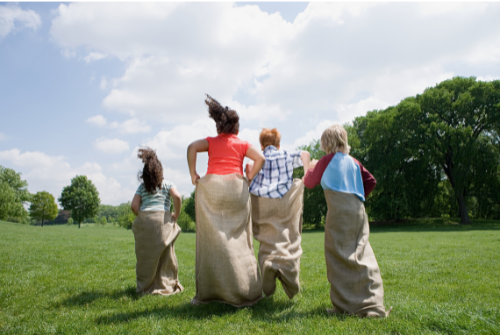
A game or an activity is a great way to engage your service users (even ‘professionals’ enjoy games!).
Not to mention we work with people, so using a method which allows for a range of language, literacy, physical and learning abilities means that you open up for richer responses from everyone.
Just remember – you know the people you work with best, so you are best placed to identify appropriate methods.

Also, think about who in your team has the skills to help you. You will need to access your data and make sense of it at some point …so deciding who is responsible for it, and where and how it will be stored is important.
Lastly, it is important to remember that nothing is set in stone, and you can keep tweaking your methods until you find something that works for you!
Ready to get creative?
Click here to find our method sheets (all of which are free to use) and try adapting them to your needs, or simply use them for inspiration!

Need help understanding the steps of effective evaluation?
See below for some of the support available to third sector organisations. If you can’t find something suitable for your needs please get in touch to see how we could help you!
Tailored support services
Facilitated discussions & practical action planning – ideal for any evaluation challenge you’re facing as a team, project or organisation.
Training workshops
Throughout the year we offer a host of different training workshops – these workshops are also available to commission.
Commissioned workshops
Find out more about commissioning our workshops for your organisation or your members/funded organisations.
Self-directed learning
We have created free, online, interactive learning modules for members of third sector organisations to develop the knowledge and skills to be able to do self-evaluation at their own pace.

Our principles for good evaluation can help you to judge if you are happy with your evaluation. They are used within this blog to highlight the principle that is being used.
